Open models
Execute the engineering assumption.
MATLAB and Python references for battery thermal response and DC-link sizing, with tests and limits in view.
Open model libraryElectrical R&D · Power Electronics · Agentic Engineering
I turn battery thermal behavior, power-conversion constraints, and QA requirements into auditable engineering decisions.
Mohammad Rezwan Khan is an Electrical R&D Engineer and an Aalborg University PhD in Energy Technology. His work connects battery thermal systems, BESS QA/QC, FAT/SAT readiness, grid-forming control, and MATLAB/Simulink model validation.
Inspectable work
Models, quality artifacts, and AI workflows carry visible assumptions, boundaries, and source paths.
Open models
MATLAB and Python references for battery thermal response and DC-link sizing, with tests and limits in view.
Open model libraryBESS QA/QC
A sanitized path from requirements through FAT/SAT, NCR closure, commissioning, and handover.
Open artifact libraryAgentic Engineering
A curriculum draft for tool use, automated checks, visible failures, and explicit engineer approval.
Review the syllabusOpen engineering models
The catalogue connects audited open-source projects and focused model views to pinned code, tests, research context, and explicit limits.
Battery · converters · BESS control · MATLAB/Simulink
Battery thermal · MATLAB/Python reference
Power electronics · MATLAB/Python reference
Battery degradation · analysis software · Python
Battery thermal · research translation · Python
Grid storage · research benchmark · Python
BESS control · validated MATLAB/Simulink model
Grid services · executable playbook · Python
BESS delivery · QA/QC toolkit · Python/JSON
Explore the complete open-engineering library Explore browser laboratories
Engineering decisions
Employer-and-date context stays visible; confidential project data stays private.


Human-supervised AI
The workflow exposes the objective, approved tools, generated artifacts, checks, stop conditions, and accountable reviewer.
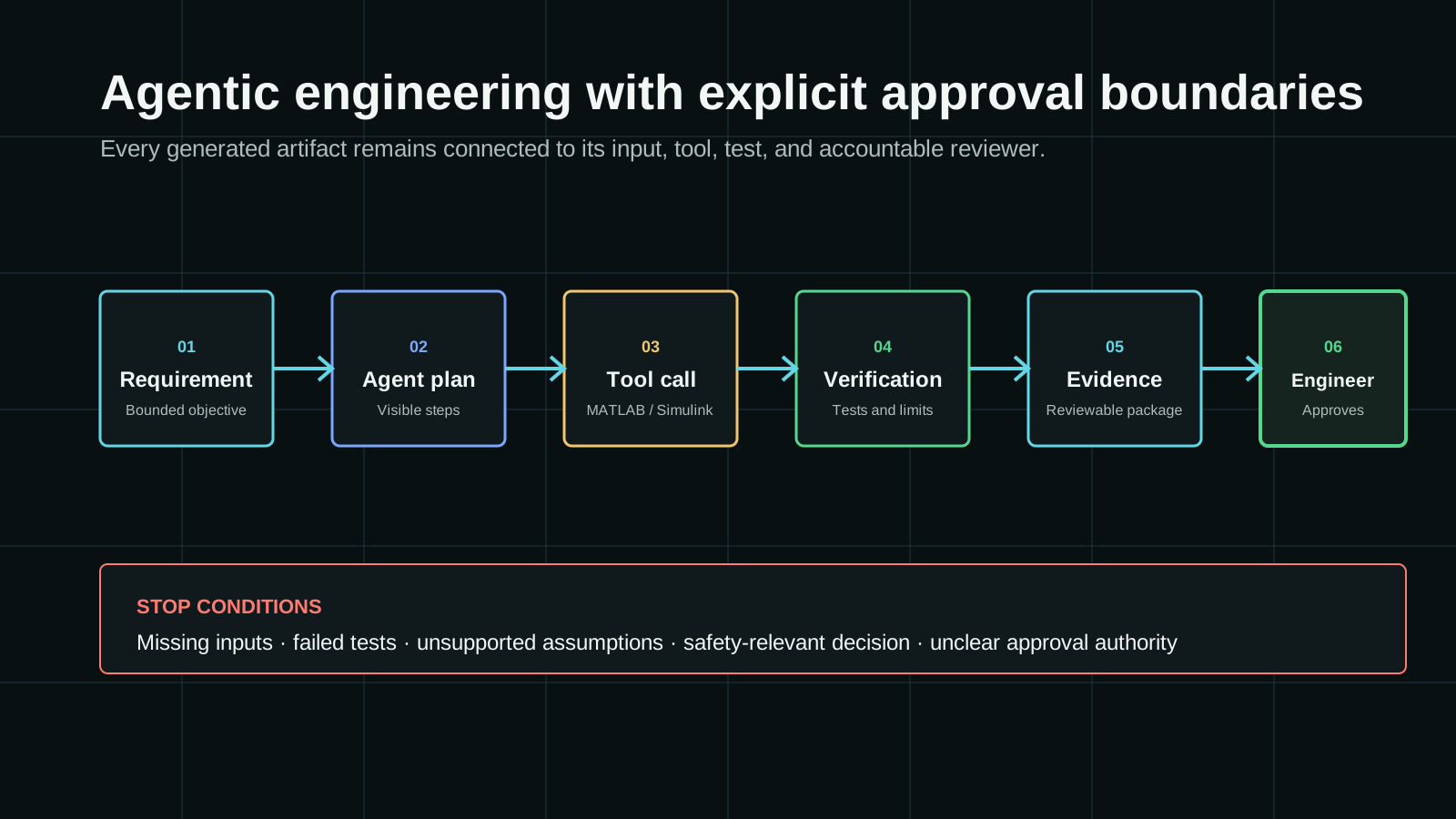
Bounded input
Record the objective, system boundary, available evidence, prohibited actions, stop conditions, and approval authority.
Illustrative workflow scenario
Proposed — The engine suggested a conservative cooldown profile and a revised current envelope for a candidate pack design.
Illustrative check — In this hypothetical scenario, checks flag two edge cases outside acceptance bounds, including edge-zone hotspot growth in case 4; no test was run and no evidence package is implied.
Engineer review — The engineer withholds acceptance because the illustrative residuals do not meet safety bounds and requests revised boundary conditions and another validation run.
Illustrative outcome: Human approval remains required; this is not an executed pilot, test result, or field outcome.
See the illustrative workflowPublished research
The DOI establishes the scientific record. The implementation exposes selected equations, assumptions, tests, and engineering limits.
Research software
Thermal systems
State estimation
BESS control
Technical conversation
Send the system boundary, available evidence, and decision deadline. I will reply with the most relevant model, case study, or technical next step.
Electrical R&D Engineer | Battery Systems | BESS QA/QC
I am Mohammad Rezwan Khan, an Electrical R&D Engineer with a PhD in Energy Technology from Aalborg University.
I connect battery measurements, control models, and QA records so teams can expose risk before design approval, FAT/SAT, or EPC handover.

Quick orientation
Engineering proof
The engineering decisions are visible; confidential project data stays protected.
Vestas · 2018-2019
Utility-scale ESS / EPC review
TotalEnergies · 2019-2022
BESS QA/QC / FAT-SAT / NCR
Research translation
These visuals connect measured battery behavior and model-based development to cooling, control, validation, and review choices.
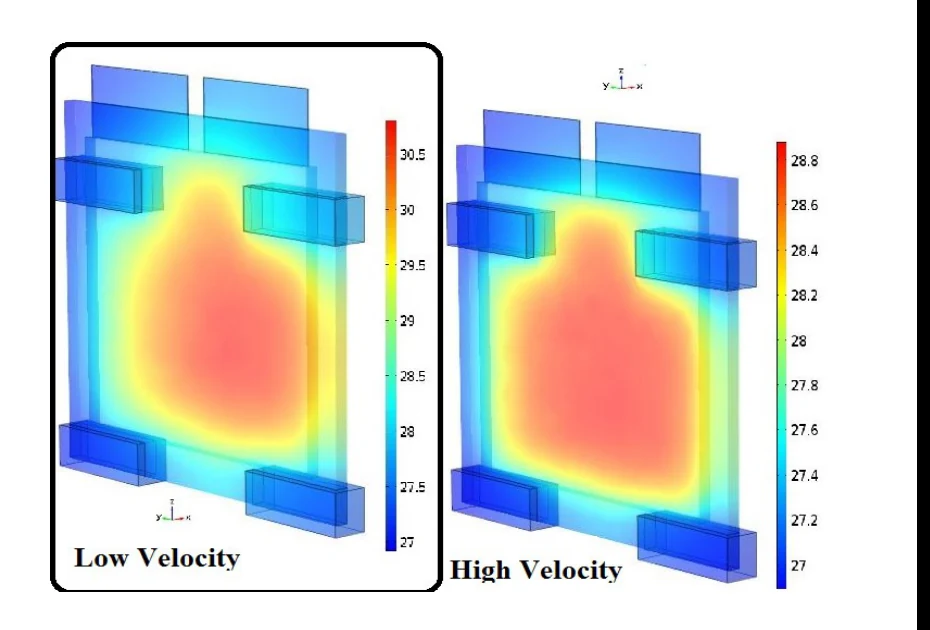 Published multiphysics model
Thermal evidence
A pouch-cell module model translates localized temperature behavior into evidence for cooling architecture and operating limits.
Open the publisher recordFeatured publications
Each selection links a technical method to the battery, BESS, or control decision it can support.
Journal of Power Sources · 2014
Batteries · 2017
IEEE IECON · 2022
IEEE EVER · 2016
Impact & metrics
Research reach
20,879+Reads listed on the public ResearchGate profile
Public profile link for battery thermal management, BESS, smart-grid, and SoC-estimation work.
Source checked 9 July 2026.
Citation signal
648Google Scholar citations
Refreshed nightly through the SerpApi Google Scholar Author API; the linked Scholar profile remains the source of truth.
Cached Scholar snapshot; open the source for the current count.
Publication base
17Publications listed on ResearchGate
Includes calorimetry, pouch-cell thermal modeling, BTMS design, SoC estimation, and grid-forming BESS control.
Source checked 9 July 2026.
Profile trail
Public profiles for cross-checking authorship and research scope
Use these links to verify works, citations, co-authors, and research themes without relying on the site alone.
Quick facts
Four direct answers for engineering leaders, recruiters, and research collaborators.
I develop and validate battery, BESS, and smart-grid systems. My focus includes thermal management, model-based control, MATLAB/Simulink validation, FAT/SAT readiness, and QA/QC traceability.
I turn fragmented evidence into reviewable decisions. I connect requirements, test cases, interfaces, NCR ownership, and handover records across R&D and EPC delivery.
Use the public source that matches your review. Verify authorship through ORCID, citations through Google Scholar, and publication context through ResearchGate or DOI-backed records.
I am available for senior R&D, BESS QA/QC, validation, and technical-review missions. Share the decision, evidence gap, and timing.
Engineering perspective
The hardest project friction I have seen rarely begins with a missing calculation. It begins when assumptions, test evidence, owners, and acceptance decisions stop connecting.
I structure engineering records so the next reviewer can understand what changed, why it changed, and what evidence supports the decision without reconstructing the project from memory.
Human impact: clearer handovers reduce avoidable rework and help multidisciplinary teams make accountable decisions under delivery pressure.
Technical philosophy & research
My work uses calorimetry, multiphysics thermal modeling, SoC estimation, FMEA, and SIL/HIL validation to make battery behavior testable before scale-up.
Profile
Mohammad Rezwan Khan is an Electrical R&D Engineer working across battery systems and model-based validation. He was awarded a PhD in Energy Technology by Aalborg University, Denmark, for research on thermal management of battery systems for electric-vehicle and smart-grid applications. He is preparing to launch an educational app development company in the UK; the venture is planned and not yet operating.
Predict and improve performance before it becomes reliability risk in EV and grid-connected battery systems.
Shape BESS control logic that can be reviewed, tested, and documented across operating modes.
Turn R&D outputs into delivery choices across hybrid powertrain, renewables, and power electronics.
Achievement stories
Selected examples framed the way engineering managers evaluate work: what was unclear, what I did, and what became easier to decide.
Battery research
Utility-scale ESS
BESS QA/QC
Expertise pillars
Optimizing subsystem architecture and energy flow for next-generation electric mobility.
Deploying intelligent control and resilient storage strategies for grid-forming BESS.
Maximizing PV-battery integration and storage flexibility for utility-scale delivery.
Engineering robust converters and fault-detection systems for uncompromised power quality.
Applying digital twins and predictive modeling to optimize battery thermal behavior and grid response.
Core capabilities
BESS roadmap, QA/QC, FAT/SAT, NCR tracking, MATLAB/Simulink, and project controls for energy-system delivery.
BESS QA/QC lead asset
Download the one-page readiness checklist without sharing an email. For a working CSV structure covering FAT/SAT evidence, NCR ownership, closure, and handover, use the professional request.
Instant PDF · No email required BESS QA/QC readiness checklist One page of pre-FAT/SAT checks for requirements, test evidence, NCR closure, commissioning, and handover. Download checklistFeatured case studies
Two focused examples tied to the career timeline: EPC bidder review and QA/QC traceability for battery energy storage work.
Utility-scale EPC Project Leadership
QA/QC Systems Implementation
Career journey
A CV-derived view of R&D, BESS portfolio strategy, utility-scale EPC evaluation, QA/QC systems, and battery-grid research milestones.
June 2022 - Present
Advancing model-based design for hybrid power systems through RCP architecture, HMI development, simulation-based testing, and CI/CD workflows for MATLAB, Simulink, and RCP environments.
November 2019 - June 2022
Built strategic BESS portfolio intelligence across standards, market requirements, customer needs, technical specifications, warranty cases, quality cost drivers, sizing, O&M, and decarbonization roadmaps.
May 2018 - May 2019
Led energy storage engineering inside hybrid solutions, covering degradation modelling, utility-scale ESS sizing, technical specifications, EPC bidder proposal review, RFP support, due diligence, and LCoE-driven value engineering.
2017 - 2018
Led BMS and BTMS technology work for electric vehicle, heavy transport, and maritime storage applications, combining ISO 26262 functional safety, HIL verification, quality assurance, and partner-backed project planning.
2013 - 2017
Awarded a PhD in Energy Technology for research on thermal management of battery systems for EV and smart-grid applications, including cell characterization, multiphysics modelling, SIL/HIL testing, and FMEA.
June 2011 - August 2013
Developed battery-grid integration research, online SoC estimation, nonlinear parameter estimation, Kalman filtering, battery characterization, regression test campaigns, and multidisciplinary QA practices for battery systems.
Visual engineering briefs
Each face connects a career chapter to the engineering methods, decisions, and outcomes behind it.
01 / 04
BESS strategy
Market intelligence, product strategy, technical operations, and cross-functional leadership.
Technical philosophy
I prefer requirement IDs, test logs, acceptance criteria, and versioned handover files over broad claims.
Point of view 01
Thermal management, BMS logic, power electronics, enclosure design, and operating context have to be evaluated as one coupled risk picture.
Point of view 02
A strong inspection system connects deviations, NCR owners, punch-list closure, and handover files.
Point of view 03
I look for AI use cases that improve diagnosis, sizing, forecasting, simulation, or traceability, not surface-level automation.
Next step
Send the system context, available evidence, and decision deadline. I will reply with the relevant method, case, or next question.