Traceability over fluency
A persuasive answer is not evidence. Inputs, transformations, tests, and sources must remain inspectable.
Consulting scope · Curriculum draft · Human-supervised AI
I help Energy R&D teams structure bounded agents around approved MATLAB and Simulink tools, deterministic tests, visible evidence, explicit stop conditions, and engineer approval.
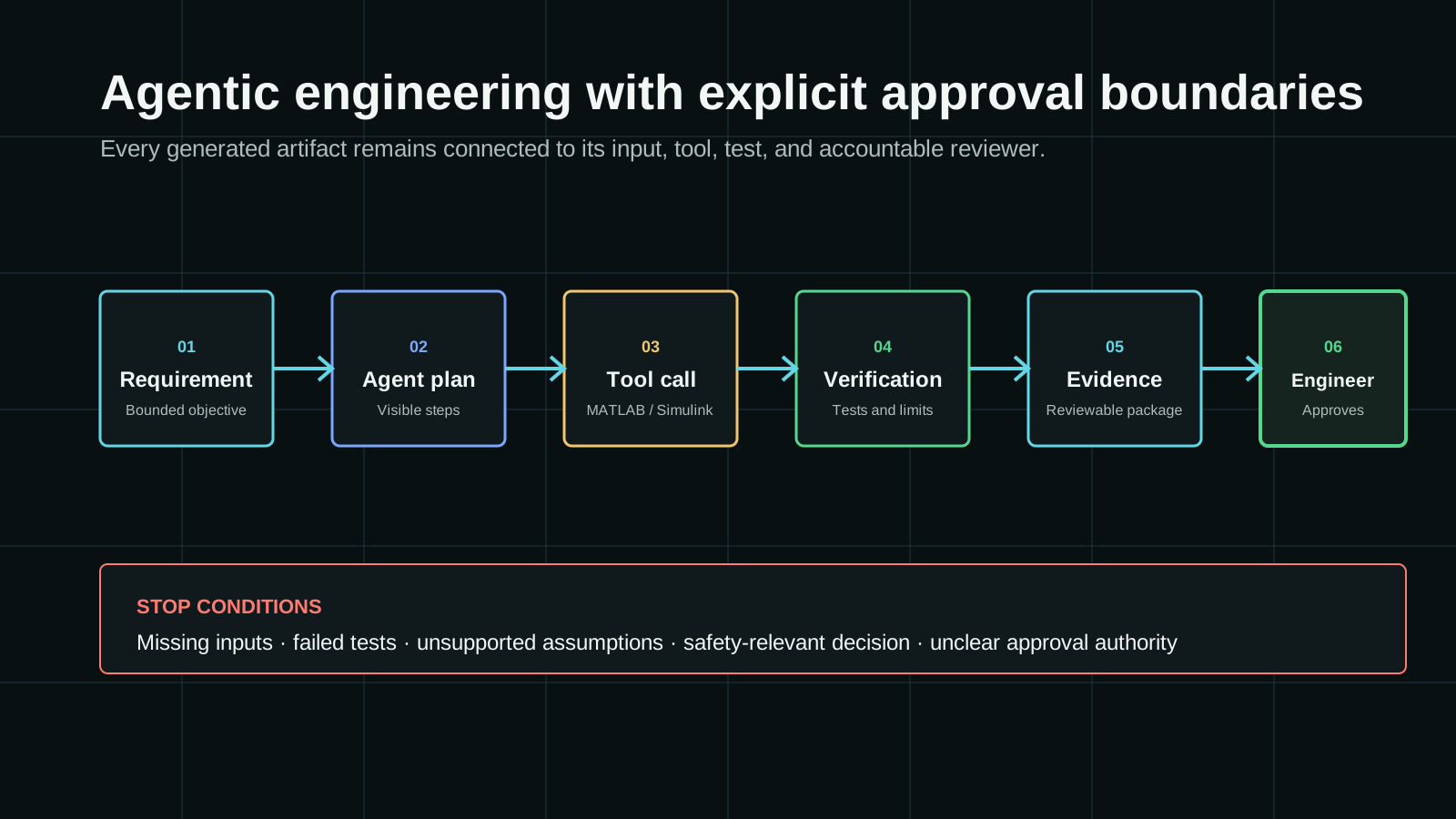
Execution contract
The agent may accelerate analysis and documentation. It does not own the engineering decision.
Syllabus
Define the objective, permitted actions, unavailable information, stop conditions, and approval authority.
Convert source documents and engineering questions into explicit, traceable working context.
Use typed inputs, unit declarations, output schemas, deterministic scripts, and recorded tool results.
Read model hierarchy, interfaces, parameters, signal paths, and diagnostics without inventing model intent.
Run tests, compare tolerances, identify missing evidence, and preserve failed results for review.
Assemble assumptions, tool calls, outputs, plots, tests, limitations, and unresolved questions.
Stop on missing inputs, failed tests, unsupported assumptions, safety relevance, or unclear authority.
Worked transcript
Example artifact
Proposed by engine: revise current window, update thermal guard-band, and recalculate hotspot trend for a conservative start-up schedule.
Tool output: checks identified two edge cases outside acceptance bounds and retained raw data, scripts, and assumptions in the evidence set.
Engineer action: denied automatic acceptance, added revised sensor placement and boundary conditions, and routed the change for a second validation run.
Outcome: no safety decision was executed without human approval; every step stayed replayable and auditable.
Operating principles
A persuasive answer is not evidence. Inputs, transformations, tests, and sources must remain inspectable.
Use approved engineering tools for calculations and model inspection instead of asking a language model to approximate them.
Do not suppress failed checks, missing files, unsupported assumptions, or uncertainty to produce a cleaner narrative.
Safety, compliance, release, and acceptance decisions remain with authorized engineers.
Inspectable references
The MATLAB Simulink Energy Lab exposes model checks and release evidence; its focused battery thermal case study keeps equations and assumptions inspectable; VoltRL binds protocol, results, and data provenance; and the BESS QA/QC Toolkit turns status, completeness, deadlines, traceability, and acceptance into reviewable gates. The full open engineering portfolio keeps failed assumptions and engineering boundaries visible.