Triangular ripple
The unit test verifies the implemented Ipp / (8 f C) relationship.
Focused child case · power electronics · verified 28 July 2026
Two inspectable relationships estimate voltage ripple for an ideal triangular capacitor-current waveform and minimum capacitance for a defined constant-power energy pulse.
Engineering question
These are first-pass checks for exposing current, frequency, energy, bus-voltage, and allowable-drop assumptions before switching, lifetime, thermal, tolerance, and component studies.
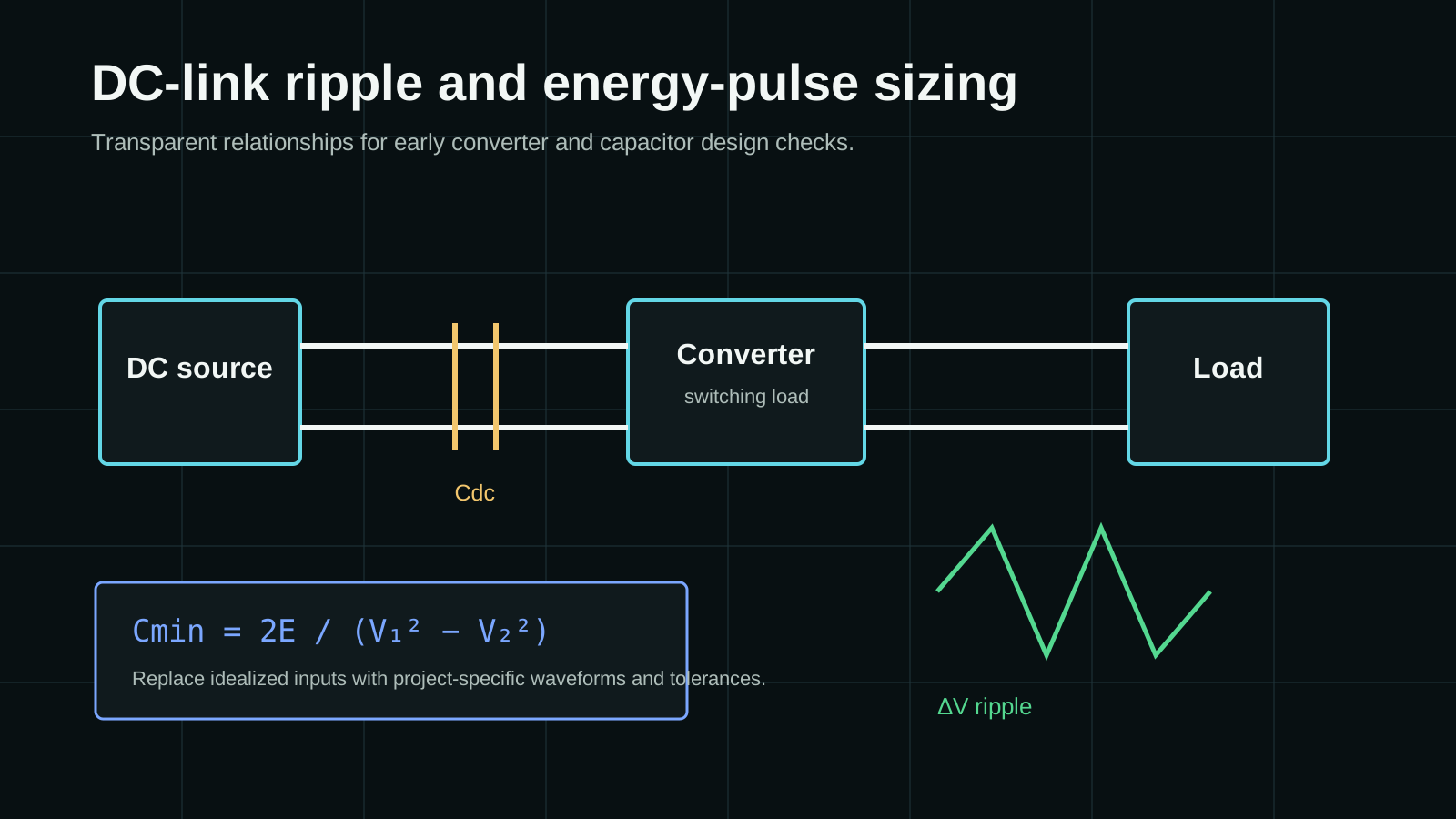
Explanatory architecture
Source, capacitor, converter, and load define the boundary; waveform and voltage-window assumptions determine which relationship applies.
Energy-pulse relationship
The companion ripple relationship assumes a zero-mean triangular capacitor-current waveform: ΔVpp = Ipp / (8 f C).
Verified result
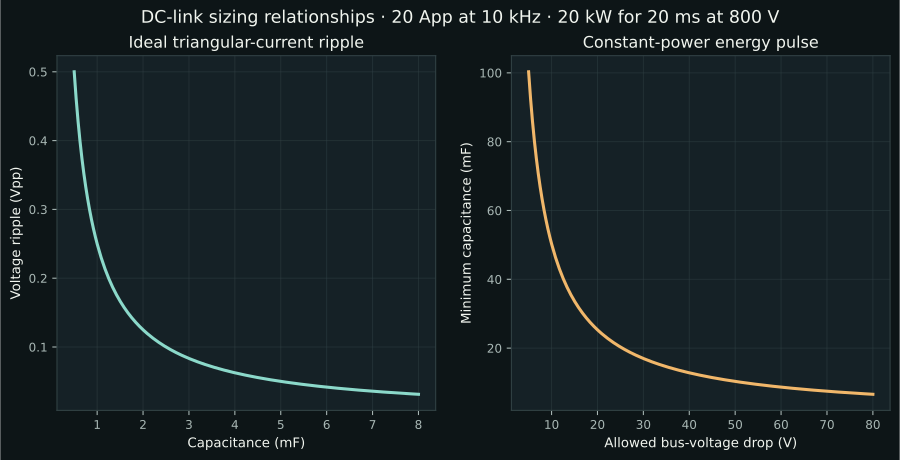
The figure states 20 App at 10 kHz and a 20 kW, 20 ms pulse at 800 V. It is generated from the pinned Python relationships, not manually invented data.
python scripts/generate-open-engineering-figures.py --sources-root <audit-root>Validation and evidence
The unit test verifies the implemented Ipp / (8 f C) relationship.
A valid constant-power pulse produces positive capacitance from the exact capacitor-energy change.
The implementation rejects an allowed drop that equals or exceeds the initial bus voltage.
MATLAB equivalents are present. The automated six-test repository count comes from the Python suite across thermal and DC-link families.
Reproduction path
git clone https://github.com/mohammadrezwankhan/battery-power-models.git
cd battery-power-models
git checkout 7d9f61f1ebdca73f9facce5129f79805b1747ed0
python src/dc_link.py
python -m unittest discover -s tests -v
Engineering boundary
Parent and related context